When we eat an egg—especially one labelled free-range—do we imagine the hen who laid it is right now foraging in a yard in the sunshine? And when we pour milk into our tea, do we think that the dairy cow who gave it to us is enjoying her day in a meadow?
This is not how industrial farming works.
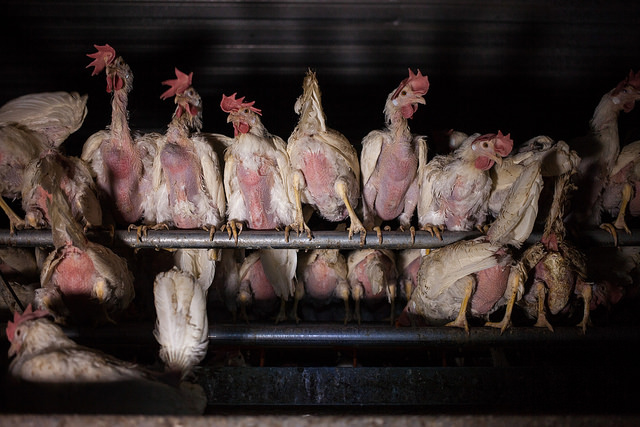
Hens Farmed For Their Eggs
Hens are deliberately bred to lay as many eggs as possible while consuming as little feed as possible. That’s where the profit lies. In the UK, around half of all eggs come from caged birds (despite what people think, cages are not banned so long as they have a perch and are therefore considered “enriched”), and half are free range. But free-range birds still do not roam about a yard, scratching in the earth. Most live inside industrial warehouse-style hangars with tens of thousands of other birds. If the weather permits, they will be allowed access to the outdoors, which may be no more than a patch of dirt, and many birds will never even see it. Hens are territorial, and weaker birds may not dare to cross the unit to find their way out.
No matter the system—whether free-range, barn, organic, or caged—there is a dark secret at the heart of the egg industry: what happens to the male chicks. For every female chick hatched who will go on to lay eggs, a male chick will also hatch who can’t. He will be too scrawny a bird to rear for his flesh, and so the industry does not waste food on him. In almost every part of the world, he will be killed on his very first day of life—gassed to death, ground up alive, or suffocated. It’s a merciless business.
Cows farmed for their milk
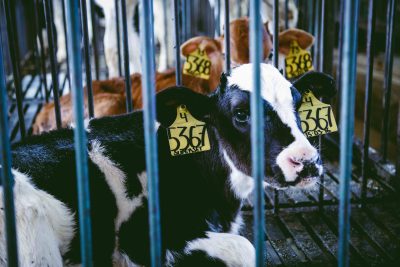
And it is a little better for cows. To give milk, a cow—like all mammals—must first be pregnant, but it is not her calf that is wanted, it’s her milk. The calf is little more than a by-product. If female, she will be taken away within a few days and fed on milk replacement, so that the milk that her mother made especially for her can instead be sold to people. The calf will grow up and may follow her mother into the industry, and like her mother, she will suffer the physical toll of repeated impregnations, birth, and near-constant milking. She too will be worn out by the age of five or six—”spent” is what the industry calls it—and sent to slaughter. Her daughter will replace her, and so the cycle of suffering continues.
The future for male calves may be even shorter and bleaker. They cannot produce milk and are often the wrong breed for beef. Some are reared for veal, while others are simply shot in the yard soon after birth, and all because we want the milk his mother made for him. The disposal of male calves is routine on high welfare farms as well as in ‘zero-grazing’ factory units. It’s the nature of the industry.
Whether the calf is male or female, separation from their mother can be heart-breaking for both. It has long been known that cows grieve for the loss of their calves, and some bellow for days, calling desperately for their lost young. The emotional toll is incalculable.
The Most Humane Diet
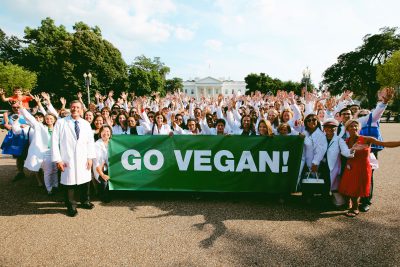
Switching to more compassionate alternatives is pretty straightforward: we can, for example, choose plant milks for our tea and breakfast cereal, and egg-replacers for scrambled eggs or in our baking. It’s no big deal. We eat the foods we love and no one is harmed.